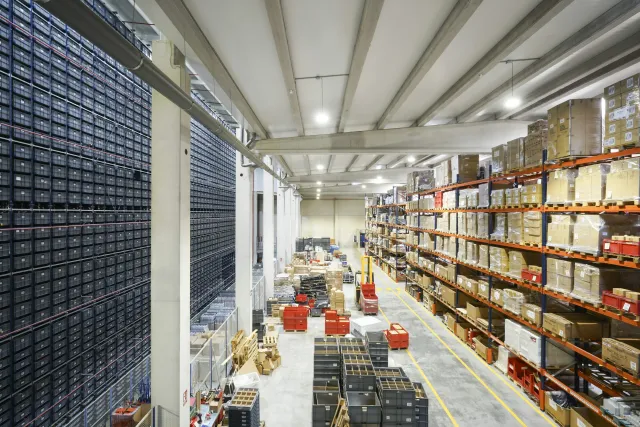
Original USD consignor model with explicit control and sell-through assumptions. Official AASB 15 and IAS 2 explanations support recognition and inventory measurement; quantities and prices are invented.
Start with control rather than the shipping document
A producer can empty its warehouse without completing a sale. When a dealer can send goods back, owes nothing until onward sale and cannot prevent the producer from redirecting stock, shipment statistics may describe distribution activity rather than earned revenue. The advanced financial question is how to correct channel revenue while preserving the inventory that still belongs economically to the producer. An analyst should reconcile units, rights, receivables and cash instead of accepting a dealer invoice as conclusive evidence of customer control.
AASB 15’s IFRS-aligned consignment guidance focuses on whether the receiving party obtained control and identifies redirect rights and payment obligations as indicators. Our example explicitly assumes the producer retains control until a dealer sells to an end customer. It does not claim that every return right makes an arrangement consignment. Ordinary completed sales with returns require a different model. The signed agreement and actual conduct must support the control premise before any accounting correction or lender discussion follows.
Supporting references: 1. AASB 15 Appendix B: Consignment arrangements, B77–B78
Write the complete unit and cost ledger
All amounts are invented USD for a single reporting period. A producer begins with zero inventory, manufactures 10,000 identical units for cash at USD 60 each and ships 6,000 units to a dealer. It retains 4,000 in its warehouse. The producer’s selling price on each verified onward sale is USD 100, and the dealer earns a separate USD 10 selling commission per unit sold. Assume the producer is principal for those sales; the dealer’s own retail pricing has no role in this model.
By the reporting cutoff, verified end-customer sales cover 2,500 units, all for cash. The dealer has remitted the producer’s gross USD 250,000 proceeds, and the producer has separately paid the USD 25,000 commission. The dealer still holds 3,500 units on consignment. Total producer-owned units are consequently 7,500: the 3,500 at the dealer plus 4,000 in the warehouse. There are no returns, damaged units, deposits, credit losses, freight charges, taxes or other cash flows. Those omissions are explicit, rather than unexplained differences in the inventory count.
Hypothetical worked example
Consignment Control: Correct Channel Revenue and the Inventory Still at Risk — USD model
Model setup
Read these assumptions before comparing the scenarios.
- Invented USD single-period producer model with zero opening inventory and 10,000 units manufactured for cash at USD 60 per unit.
- 6,000 units shipped on consignment; producer retains control until end-customer sale; 2,500 units sold, paid and remitted by cutoff.
- Producer revenue USD 100 per sold unit; USD 10 commission separately paid per sold unit; producer is principal.
- No returns, taxes, freight, damage, deposits, overhead or other cash movements; 7,500 units remain producer-owned.
- Sensitivity price applies to every remaining unit, selling cost stays USD 10 per unit, no further completion costs; final column uses lower of cost and net recovery.
Inventory after measurement (USD)
- 1. Original price
- 450,000.00
- 2. Cost threshold
- 450,000.00
- 3. Moderate markdown
- 412,500.00
- 4. Deep markdown
- 337,500.00
Shared zero-based value scale. Range: 0.00 to 450,000.00, in the units above. Case numbers match the labels; no probability or time trend is implied.
Hypothetical model, not observed market data or a forecast. Assumptions above; original values and calculations below.
| Remaining-stock price scenario | Producer price (USD/unit) | Net recovery on unsold units (USD) | Write-down (USD) | Inventory after measurement (USD) |
|---|---|---|---|---|
| Original price | 100.00 | 675,000.00 | 0.00 | 450,000.00 |
| Cost threshold | 70.00 | 450,000.00 | 0.00 | 450,000.00 |
| Moderate markdown | 65.00 | 412,500.00 | 37,500.00 | 412,500.00 |
| Deep markdown | 55.00 | 337,500.00 | 112,500.00 | 337,500.00 |
Calculation details
- Correct revenue
- 250,000.00 USD
(2500 * 100) - Correct cost of sales
- 150,000.00 USD
(2500 * 60) - Remaining unit count
- 7,500.00 units
(10000 - 2500) - Remaining inventory
- 450,000.00 USD
(7500 * 60) - Revenue correction
- 350,000.00 USD
((6000 - 2500) * 100) - Inventory restoration
- 210,000.00 USD
(3500 * 60) - Gross profit reduction
- 140,000.00 USD
(350000 - 210000) - Contribution
- 75,000.00 USD
((250000 - 150000) - (2500 * 10)) - Net batch cash
- -375,000.00 USD
((250000 - 600000) - 25000) - Original price net recovery
- 675,000.00 USD
(7500 * (100 - 10)) - Threshold net recovery
- 450,000.00 USD
(7500 * (70 - 10)) - Moderate net recovery
- 412,500.00 USD
(7500 * (65 - 10)) - Moderate write-down
- 37,500.00 USD
(450000 - 412500) - Deep net recovery
- 337,500.00 USD
(7500 * (55 - 10)) - Deep write-down
- 112,500.00 USD
(450000 - 337500) - Inventory price threshold
- 70.00 USD/unit
(60 + 10) - Batch cash recovery price
- 60.00 USD/unit
((375000 / 7500) + 10) - Additional sales mathematical threshold
- 4,166.67 units
(375000 / (100 - 10))
Reconstruct the earnings correction
Suppose an erroneous draft recognized all 6,000 shipped units at USD 100, reporting USD 600,000 of revenue and USD 360,000 of cost of sales. After the actual USD 250,000 customer remittance, it shows USD 350,000 of unpaid shipment receivables. Correcting the consignment assumption removes USD 350,000 of revenue and those receivables, restores USD 210,000 of inventory cost, and reduces gross profit by USD 140,000. The correction concerns the unsold 3,500 units; sold units retain their properly earned revenue.
Correct revenue is USD 250,000, cost of sales USD 150,000 and gross profit USD 100,000. Subtract the USD 25,000 selling commission to get USD 75,000 contribution before any other expenses. Inventory is USD 450,000, comprising USD 210,000 at the dealer and USD 240,000 at the warehouse. IAS 2 links expensing inventory carrying cost to related sales. Physical location does not justify expensing the entire shipment or excluding offsite owned units from the stock reconciliation when control has not transferred.
Supporting references: 2. IFRS Foundation: IAS 2 Inventories
Explain why positive contribution coexists with a cash deficit
The producer has paid USD 600,000 to manufacture the batch and received USD 250,000 from verified sales, while paying commissions of USD 25,000. Net batch cash is therefore negative USD 375,000 at the cutoff. This is consistent with USD 75,000 contribution less the USD 450,000 invested in remaining inventory. There is no missing USD 350,000 collection to chase from the dealer under the assumed contract; that draft receivable arose from recognizing goods the dealer was never unconditionally obliged to buy.
The error can distort credit analysis in two directions at once. It overstates earnings through unsold margin and makes collection performance appear poor by creating invoices without an enforceable sale. Correcting it lowers earnings but removes a fictitious debtor, while making the offsite inventory exposure visible. Treasury should forecast future sell-through and remittance dates rather than assume the erased receivable will turn into cash on its printed due date. The cash deficit is real funding of stock, even when the earlier statement presentation was wrong.
Test the remaining stock at net recovery value
The sensitivity table examines the same 7,500 unsold units. At an assumed producer price of USD 100, less USD 10 selling costs per future unit, recoverable proceeds before inventory cost are USD 675,000. At a price of USD 70 they are USD 450,000, equal to carrying cost. At USD 65 they are USD 412,500, creating a USD 37,500 write-down if those assumptions determine net realisable value. At USD 55 they are USD 337,500, creating a USD 112,500 write-down. No completion cost remains.
IAS 2’s lower-of-cost-and-net-realisable-value principle makes the USD 70 price a measurement threshold here because USD 70 less USD 10 equals USD 60 unit cost. The table’s final column is the inventory carrying amount after that test, capped at cost in the higher-price case. A write-down lowers the reported asset but does not itself provide cash or reduce the amounts already spent. Its magnitude depends on supportable selling prices and necessary selling costs, not merely the dealer’s enthusiasm about another shipment or an unsupported recovery assumption.
Supporting references: 2. IFRS Foundation: IAS 2 Inventories
Distinguish the inventory threshold from batch cash recovery
The USD 70 inventory threshold is not the price needed to recover the full batch’s historical cash expenditure. After current sell-through, the producer still has a USD 375,000 cash deficit. Selling all remaining 7,500 units incurs USD 75,000 of future commissions. Gross receipts must therefore reach USD 450,000 to close the deficit, requiring an average producer price of USD 60. That lower threshold reflects the USD 75,000 contribution already earned on earlier sales. It says nothing about an acceptable total return on the batch or recovery of omitted overhead.
At the original USD 100 selling price, each additional unit yields USD 90 of cash after commission. Closing USD 375,000 of cash deficit requires USD 375,000 divided by USD 90, or 4,166.6667 units mathematically; indivisible units mean at least 4,167 sales. That is less than the remaining 7,500 units but more than the dealer’s 3,500 on-hand units. Even complete dealer sell-through cannot alone recover batch cash without replenishment or warehouse sales. Timing, channel capacity and customer demand therefore matter alongside a price-only break-even calculation.
Verify channel evidence before extending credit
The practical checklist begins with the control agreement, redirect rights, payment trigger and dealer stock reports. Match opening dealer units plus shipments minus verified end-customer sales and returns to closing quantities. Confirm those balances independently where material. Reconcile verified sell-through to gross receipts and commissions, preserving the distinction between an agent’s sales service and an unconditional purchase. Review whether shrinkage, insurance, custody or competing creditor claims threaten recovery of goods kept offsite, even when the producer’s accounting ownership appears clear.
For the next shipment decision, compare total owned stock and dated cash requirements with credible channel capacity. Obtain aging by unit cohort and support for the markdown assumptions before treating book inventory as liquid collateral. Correct the USD 350,000 fictitious receivable in both financial and borrowing analyses rather than replacing it automatically with equal eligible inventory. Set a review date for stock that remains at the dealer beyond the planned selling window. The decision should rest on control, verified onward sales and cash recovery, with any contractual or legal uncertainty documented explicitly.
Supporting references: 1. AASB 15 Appendix B: Consignment arrangements, B77–B78
Limits of this analysis
- Consignment control and principal status are assumed from the hypothetical contract; ordinary sales with return rights need different accounting.
- All sold units are paid at cutoff; dealer credit risk, remittance delay and customer refunds could create separate receivables.
- Cost excludes overhead, freight and tax; actual inventory costing and profitability require all applicable costs.
- Uniform markdown prices and fixed commissions omit product aging differences, channel capacity and disposal or completion costs.
- Accounting ownership does not establish legal recovery or borrowing eligibility; custody, insolvency and security rights require separate verification.
Sources and scope
- AASB 15 Appendix B: Consignment arrangements, B77–B78
Consignment revenue depends on transfer of control; redirect rights and the dealer’s payment obligation are relevant indicators.
Scope: Official Australian compilation of IFRS-aligned guidance, used for the control principle rather than local legal title or tax rules.. Reference accessed 2026-10-30.
- IFRS Foundation: IAS 2 Inventories
Inventory is measured at the lower of cost and net realisable value; its carrying cost is expensed with related sales.
Scope: Official overview; does not establish a lender’s collateral eligibility or a specific product’s recovery value.. Reference accessed 2026-10-30.
Illustrative calculations are not forecasts or personal recommendations. Editorial standards